Sunday, 1 November 2015

Tuesday, 27 October 2015
Research:Music video director case study-Spike Jonze
Spike Jonze is an American director, producer, screenwriter and actor, whose work includes music videos, commercials, film and television. Jonze is well known for his music video collaborations with Fatboy Slim, Weezer, Beastie Boys, Björk and Kanye West but has also directed full length movies such as Being John Malkovich (1999) ,Adaptation (2002), Where the Wild Things Are (2009) and Her (2013). He also was a co-creator and executive producer of MTV's Jackass.
Music Video's
He has produced over 50 music videos from 1992 to 2013 including; Praise You - Fatboy Slim and Da Funk - Daft Punk. His breakthrough video for the Beastie Boys song "Sabotage" earned him four MTV Video Music Awards. Throughout the 1990s, he directed music videos and commercials.
Spikes personal factor is making music videos and films that are off-beat with their storytelling, particularly a mix of live action, animation and puppetry. Throughout the 1990s, Jonze directed music videos for many other artists—including R.E.M., the Breeders, Puff Daddy, the Chemical Brothers.
Examples of his work:
Praise you- Fat Boy Slim
Jonze actually starred in this video himself, along with a fictional dance group ‘The Torrance Community Dance Group’. The video was shot guerrilla-style (on location without obtaining permission from the owners of the property) in front of the public outside a movie theatre in Westwood, California. The video mianly features Jonze and the dance group dance to "Praise You", apart from at one point when a theatre employee comes and turns off the stereo. Norman Cook (Fatboy Slim) is also seen briefly in this video as one of the onlookers. The video apparently cost only $800 to produce, with most of that money going towards a replacement boombox and food for the cast and crew. The video won three major awards at the 1999 MTV Video Music Awards: Breakthrough Video, Best Direction and Best Choreography. It was also nominated for, but did not win, Best Dance Video. It was voted number one of the 100 best videos of all time, in a poll to mark the 20th anniversary of MTV.
Da Funk – Daft Punk
This video focuses on the character of Charles (Tony Maxwell) who is a dog in a leg cast with a crutch who has lived in New York City for only one month and is shown walking around with a boombox blasting "Da Funk" at a high volume. Throughout the video the boombox annoys the people he encounters as he is unable to turn it off . At one point Charles meets a woman who he was neighbours with when he was younger and they agree to have dinner together at her home. They decide to go there via the city bus. The woman boards the bus, but Charles is stopped by a sign stating "NO RADIOS". As he is unable to turn off his boombox and is forced to remain at the bus stop. Although the video has drawn several interpretations, Thomas Bangalter (Daft Punk member) has stated: “There's no story. It is just a man-dog walking with a ghetto-blaster in New York. The rest is not meant to say anything. People are trying to explain it: Is it about human tolerance? Integration? Urbanism? There's really no message. There will be a sequel someday.”
Sources: https://en.wikipedia.org/wiki/Da_Funk
https://en.wikipedia.org/wiki/Spike_Jonze
https://en.wikipedia.org/wiki/Praise_You
Sunday, 25 October 2015
Saturday, 24 October 2015
Research:The Male Gaze-Laura Mulvey
The concept of gaze is one that deals with how an audience views the people presented. In this theory it can be seen as how men look at women. The male gaze theory was created by Laura Mulvey who coined the
term ‘Male Gaze’ in 1975. She believes that in film audiences have to
‘view’ characters from the perspective of a heterosexual male.
Features of the Male Gaze include:

Another example would be the music video for Eric Prydz - Call On Me in which the entire video consists of an aerobics class of women wearing aerobics outfits performing sexually suggestive gym routines which really has no link to the song in the background.
There are some flaws and disagreements with the theory however:
Features of the Male Gaze include:
- The camera lingering on the curves of the female body
- The events which occur to women are presented largely in the context of a man's reaction to these events.
- Women being reduced to the status of objects.
Another example would be the music video for Eric Prydz - Call On Me in which the entire video consists of an aerobics class of women wearing aerobics outfits performing sexually suggestive gym routines which really has no link to the song in the background.
There are some flaws and disagreements with the theory however:
- Some of the women may enjoy the attention and like people to look at them.
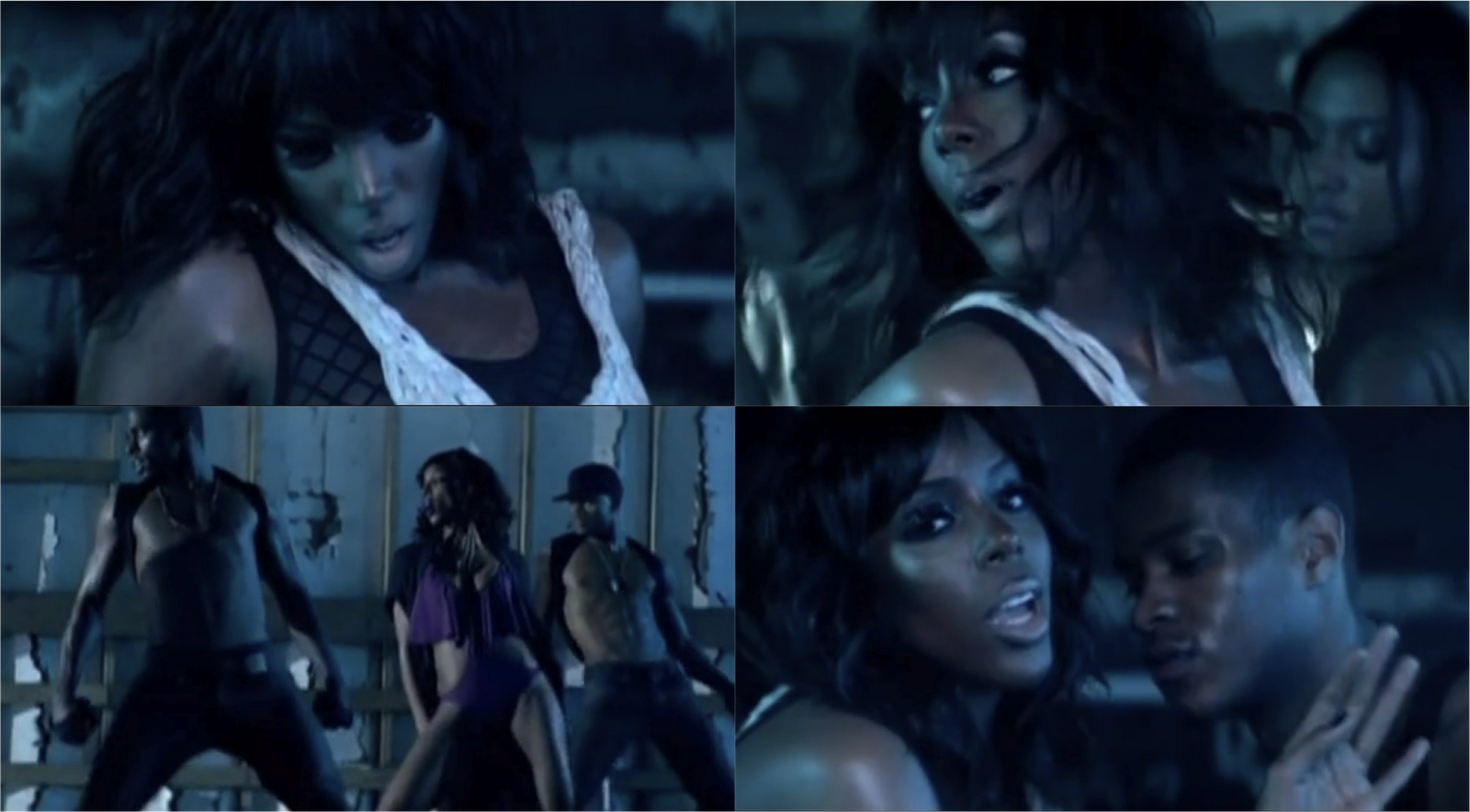
- There are videos and media products which use men in the same light, for example in Kelly Rowland’s 'Motivation' some of the men have less clothes on than she does and she treats them how some women are treated in other music videos-like objects.
- How is the heterosexual male gaze different from the homosexual gaze?
- The gaze can also be directed toward members of the same sex, not all of which are sexual, such as in comparison of body image or in clothing.
Monday, 21 September 2015
Research:Controversy In Media

From watching the video myself I can understand why the writer has the views he does. The video contains quite a lot of nudity ,which in most cases, was not really needed for example the final scene with Rihanna laying in a pile of money ,covered in blood , completely naked. This could be seen as her just being desperate for attention but could also just be a way of marketing her new video because of the controversy it has caused. Controversy is a very good way of marketing a music video because many people will go out of their way just to watch a controversial video that they may not have viewed if it had not received such attention but artists can risk loosing fans if the video is something that they don't enjoy or are not used to.
I have noticed recently many more videos are becoming controversial which could mean that more and more artists are just using controversy as a way to promote their work instead of just making something new and creative.
Sunday, 20 September 2015
Friday, 18 September 2015
Subscribe to:
Posts (Atom)